
Martin Hazel1, member of our Local Histories & Mysteries group has been researching Euphemia Violet Lyon Welby, also known as Effy Welby – a woman from Stoke who was influential in the WRNS (Women’s Royal Naval Service, better known as Wrens) during World War II.
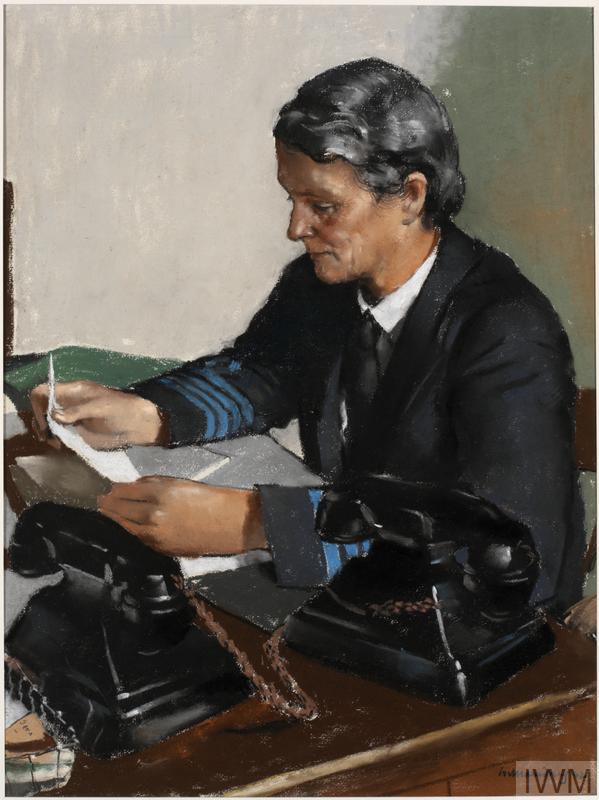
Portrait of Mrs E V Welby : Superintendent WRNS, Plymouth by William Dring (1942) – image credit – IWM Non Commercial Licence
Euphemia Welby was born in 1891 at Stoke Cottage, Devonport. Her parents were Admiral Herbert Lyon and Frances Inglis and she was baptised at Stoke Damerel Church.
She married Richard Martin Welby (1886–1930), a Royal Navy captain, who was later found dead on board his ship on 24th April 1930. At the time, Effy was pregnant with their second child, and the family lived at Belmont House, Stoke, Plymouth.
By the end of the 1930s when the Second World War broke out, widow Welby had already been a Superintendent Divisional Girl Guide Commissioner in Plymouth, and had strong connections to the powerful Astor family in the city.
Effy Welby also became chair of the Astor Institute, which had been started by Lord and Lady Astor in 1925 to assist poor people in the local area. Martin tells us:
“The Welby and Astor families were great friends. The young Richard Welby (Effy’s son) had Lady Astor as a godmother. The American-born Nancy Astor, the first female MP to take her seat in Parliament, sat as Conservative MP for Plymouth Sutton until 1945. For most of the war, her husband, Waldorf, served as the city’s Lord Mayor.”
“When war was declared in September 1939, Admiral Martin Dunbar-Nasmith, who commanded the Devonport Naval Base, was asked by the Admiralty to form a WRNS (Women’s Royal Naval Service, better known as Wrens) unit in Plymouth. The Admiral turned to his friend, Euphemia Welby. A hotel at the foot of Albert Road, in Devonport, was used to house those ‘mobile’ Wrens who did not live nearby.”
During the war, Euphemia became one of the most influential WRNS officers in the country. She was also on the staff of the Navy’s Commander-in-Chief Devonport, at HMS Drake.
She was famed for her leadership skills, fierce protection of the women who served in her sections, and her advocacy for women to be treated more equally alongside men at work in the armed forces.
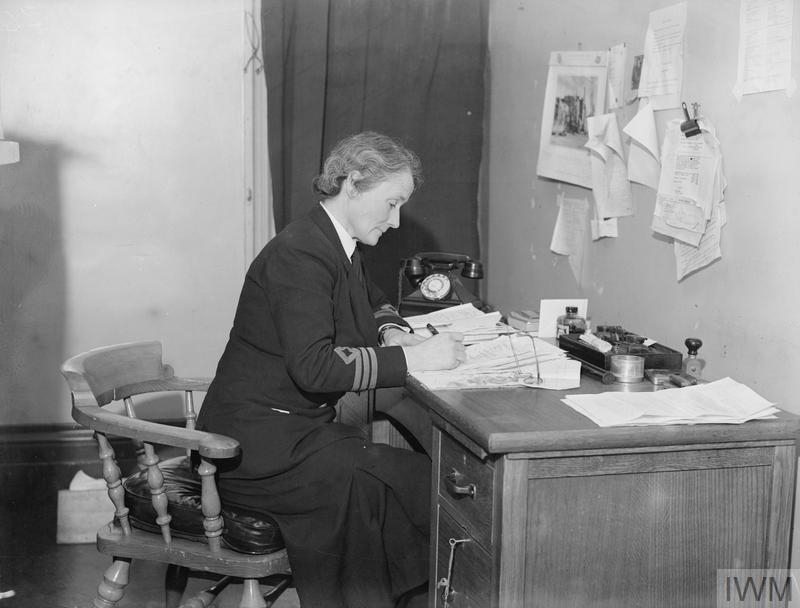
Superintendent Welby at her desk – photo by Harold William John Tomlin – – image credit – IWM Non Commercial Licence
Belmont House

Postcard of Belmont House while it was a youth hostel (after World War II) – thanks to Millie Wilson for sharing this image. Belmont House still stands today – at the end of Belmont Place (off Devonport Road, in Stoke Village).
Living just off the top of Albert Road, in Belmont House, Euphemia’s home at this time also housed her WRNS second-in-command and the Admiralty surveyor of land, who was responsible for finding places for Wrens to live in. When the bombing of Devonport began, the front bathroom of Belmont House was destroyed, but luckily the rest of the building survived.
When the air-raids became serious, Superintendent Welby informed – she did not ask – the Admiral that she would evacuate her ladies to safety. They were relocated to Yelverton, and billeted there. The following night, the Albert Road hotel at the foot of the hill, adjacent to the naval base, where they had been living, was totally destroyed.
Euphemia was proud that she never lost a WRNS Wren in the war. Vera Laughton Mathews, head of the WRNS, recorded in her memoirs that “Mrs Welby is a unique personality. She is a born leader, is entirely selfless and single-minded and has great courage both physical and moral”.
Advocating for women to do “men’s work”
Euphemia’s background as a daughter of an Admiral and wife of a naval captain produced a love and understanding of the ‘Senior Service’. The annual WRNS ceremonial drill competition, encouraged by Superintendent Welby, was held in the Royal Navy barracks square at HMS Drake, and senior RN officers insisted that Chief WRNS Vera Laughton Mathews would always take the salute.
The Royal Navy were short on manpower as the war developed, and Superintendant Welby argued that women could and should serve afloat. The Chief of the WRNS agreed, and thus the Admiral of the Fleet in October 1941 notified the Admiralty that Wrens would be allowed to serve on boats in a noncombat capacity. This experiment began in Plymouth.
Eventually, there were 1,800 serving Wrens in Devonport. They crewed small boats, serving harbour facilities day and night in all weathers. They would patrol harbours, transport naval officers on duty, collect stores and mail and run ‘liberty boats’ to and from ships.
As one young Wren said to her father, a naval officer: “We were doing liberty trips all night out to the destroyers in the Sound. The last trip at midnight was the worst. It was blowing pretty hard and we had to take 80 men out, and many of them were not sober”.
“Before we had even started, four of them went over the side. Luckily it was moonlight, so we had no difficulty in fishing for them with a boathook. I just saved a fifth from going over by catching him by his gas mask… Luckily there was a sober able seaman up with me in the bows, and between us we managed them. It was a terrific experience… None of them ever get fighting drunk. You just have to treat them all like a lot of small boys.”
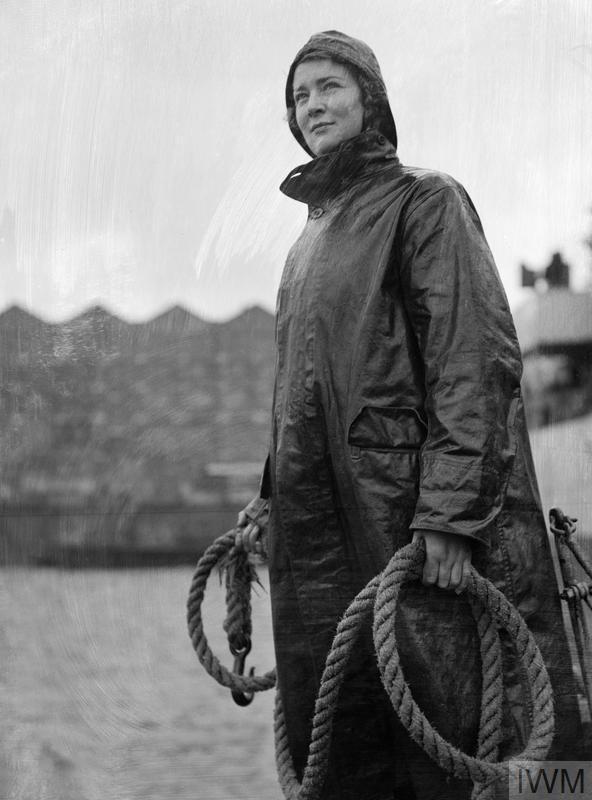
June Mortimer (a farmer’s daughter from Northern Ireland), a WRNS rating aboard a duty boat at Plymouth, November 1944. – photo by Harold William John Tomlin – image credit – IWM Non Commercial Licence
Plymouth WRNS leading the way
Wrens were also involved in search and rescue of survivors from enemy attacks near to land. Another technical task at Plymouth saw Wrens doing hydrographical surveying. Soon, they were acting as stokers and engine room artificers.
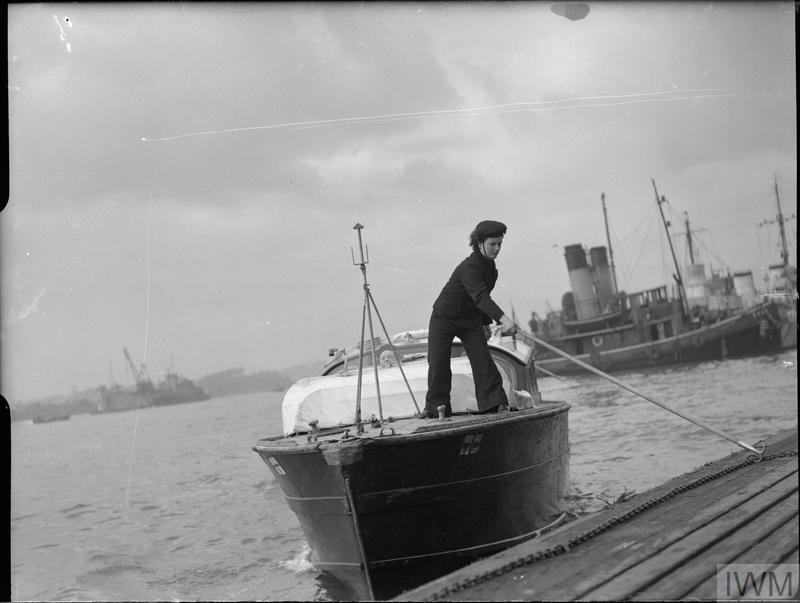
Jean Connel, of Bangor, North Wales, “bowman” of a Vosper barge at Plymouth using a pole to pull the boat alongside a quayside (1940s, during WWII) – – photo by Harold William John Tomlin – image credit – IWM Non Commercial Licence
In 1944, the WRNS supported the D-Day landings, ferrying supplies and crewing all sorts of support craft. Some served in various capacities abroad. In all of these situations, women proved that they could do what had previously bee deemed as “men’s work”. It could be said that, without women ‘stepping up’ and joining, the Allies may not have won the Second World War by 1945.
Recognition
In 1942, Queen Elizabeth, wife of King George VI, paid an official visit to Plymouth to inspect the WRNS.
Accompanied by Superintendent Welby, the Queen reviewed the ladies, and then, on a vessel manned by Wrens, Her Majesty’s standard was released. The Queen said she had pleasure in seeing so many happy faces.
On January 1, 1944, Superintendent Welby was awarded the CBE for her service.
By the end of the war, Euphemia Welby had two sons in the Navy and a daughter serving as a Wren. Her eldest son also married a Wren. Euphemia Welby died in 1987, aged 95.
Contributors:
- Martin Hazel
- Rachel Dobbs
References:
- Wartime stalwart of the Wrens. MARTIN HAZELL PRESENTS CASE FOR EUPHEMIA WELBY TO BE AWARDED A BLUE PLAQUE. – published Aug 27, 2024 – Plymouth Herald. Passages reproduced here with permission of the author. Text available online at – https://www.thefreelibrary.com/Wartime stalwart of the Wrens. MARTIN HAZELL PRESENTS CASE FOR…-a0806141183 ↩︎